The codecast field manual: running a company of agents
The org your agents report into, the inbox that sorts them by who acts next, moving a live conversation from Claude to Codex without losing a word, and ten things only codecast does. Thirteen chapters, with the real product on every page.
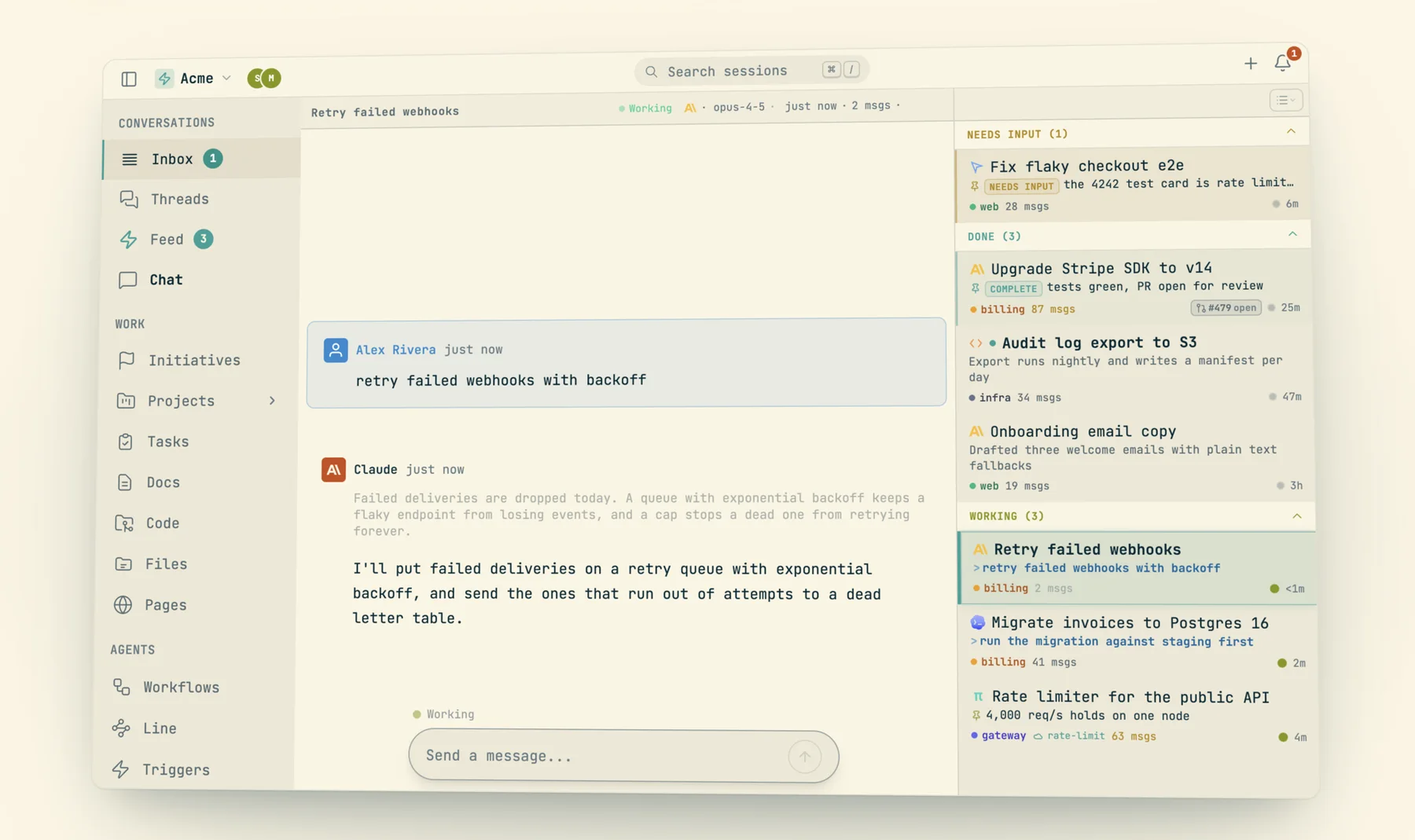
Running one coding agent is a conversation. Running thirty is a job, and most of it is overhead: finding the session that is waiting on you, remembering which agent owns which area, carrying a half-finished thought from Claude to Codex, noticing that a check went red at two in the morning. Codecast exists to take that overhead away. This manual walks through how, one piece at a time, using the real product, the real commands and their real output.
Part one covers the operating model: the org your agents report into, the inbox that sorts every session by who acts next, and how a live conversation moves from one agent to another without losing a word. Part two is ten features that exist nowhere else, each one there because running agents at volume broke something. Read it in order or jump to the chapter you need; each one stands on its own.
The operating model
How one person runs dozens of agents: who they report to, how their work reaches you, and how a conversation moves between them.
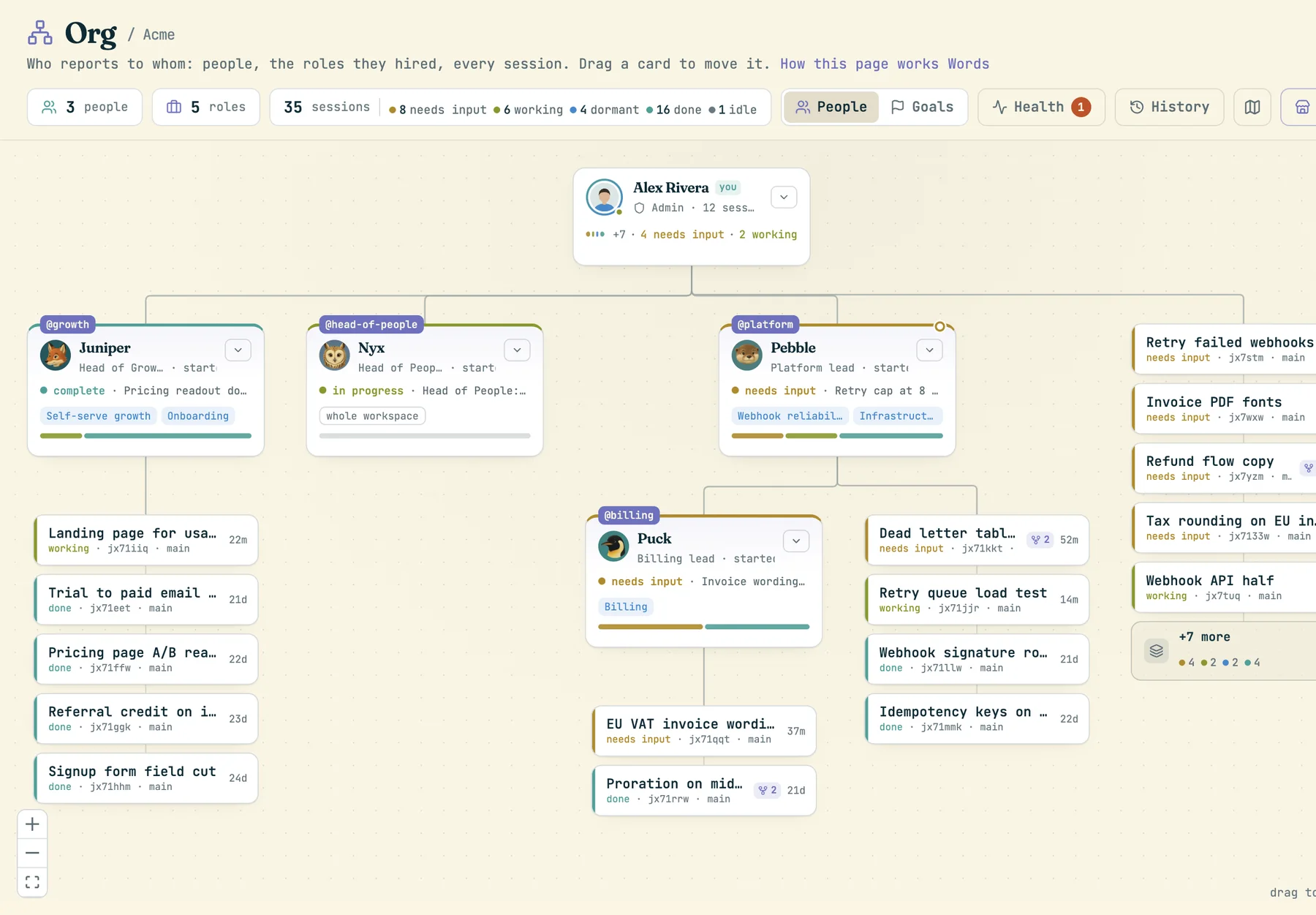
Roles are standing agent sessions with an owner, a scope and a schedule. The work reports to them, they report to you, and a Head of People keeps the chart true.
Five work states, computed by one function everywhere, and every action you can take on a session: what each does, how to undo it, and its key.
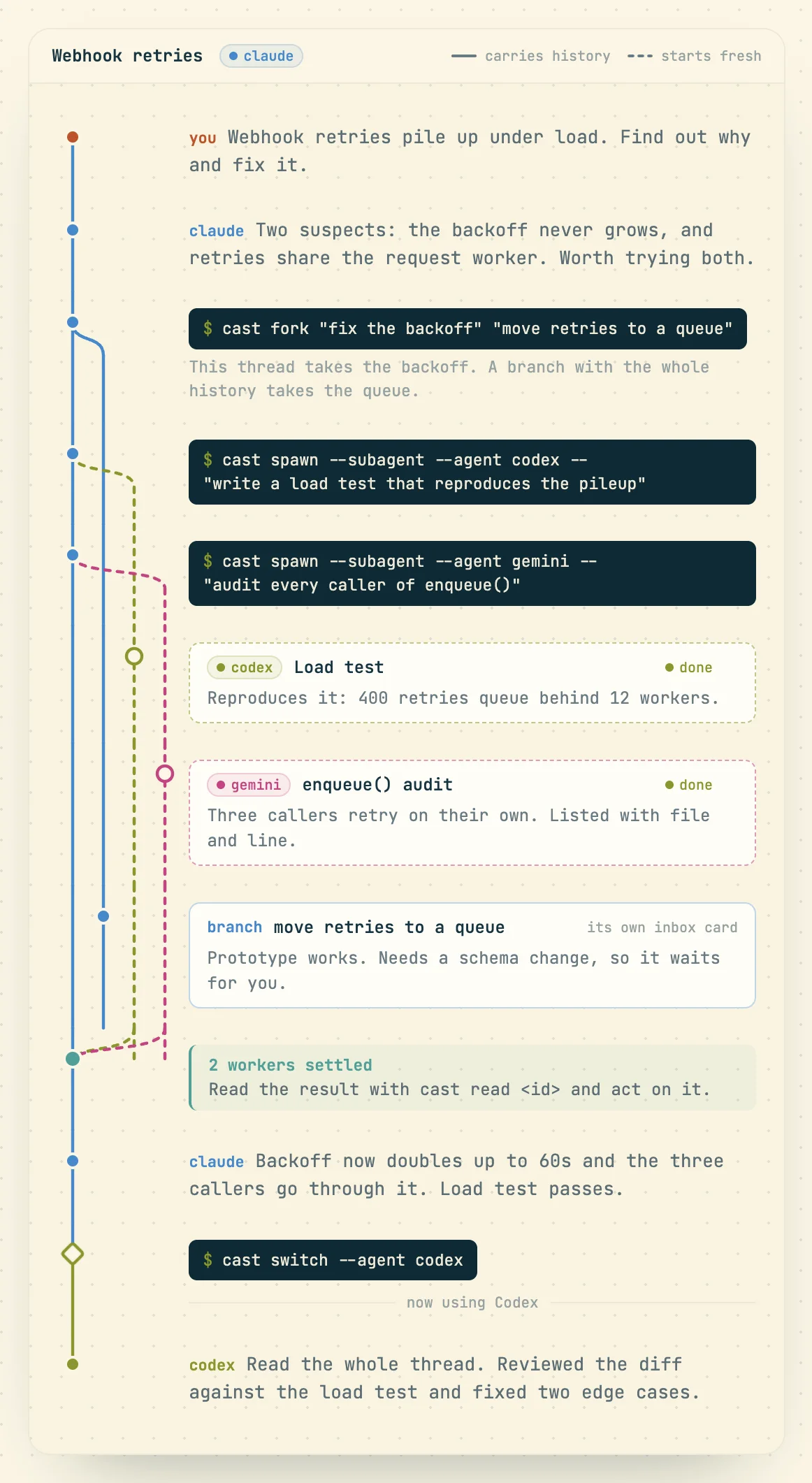
Move a live conversation from Claude Code to Codex, Grok, OpenCode or pi and keep every word. Eight ways to do it, how the transcript is rebuilt, and when to use which.
Ten things only codecast does
Each one exists because running agents at volume broke something, and each is a single command.
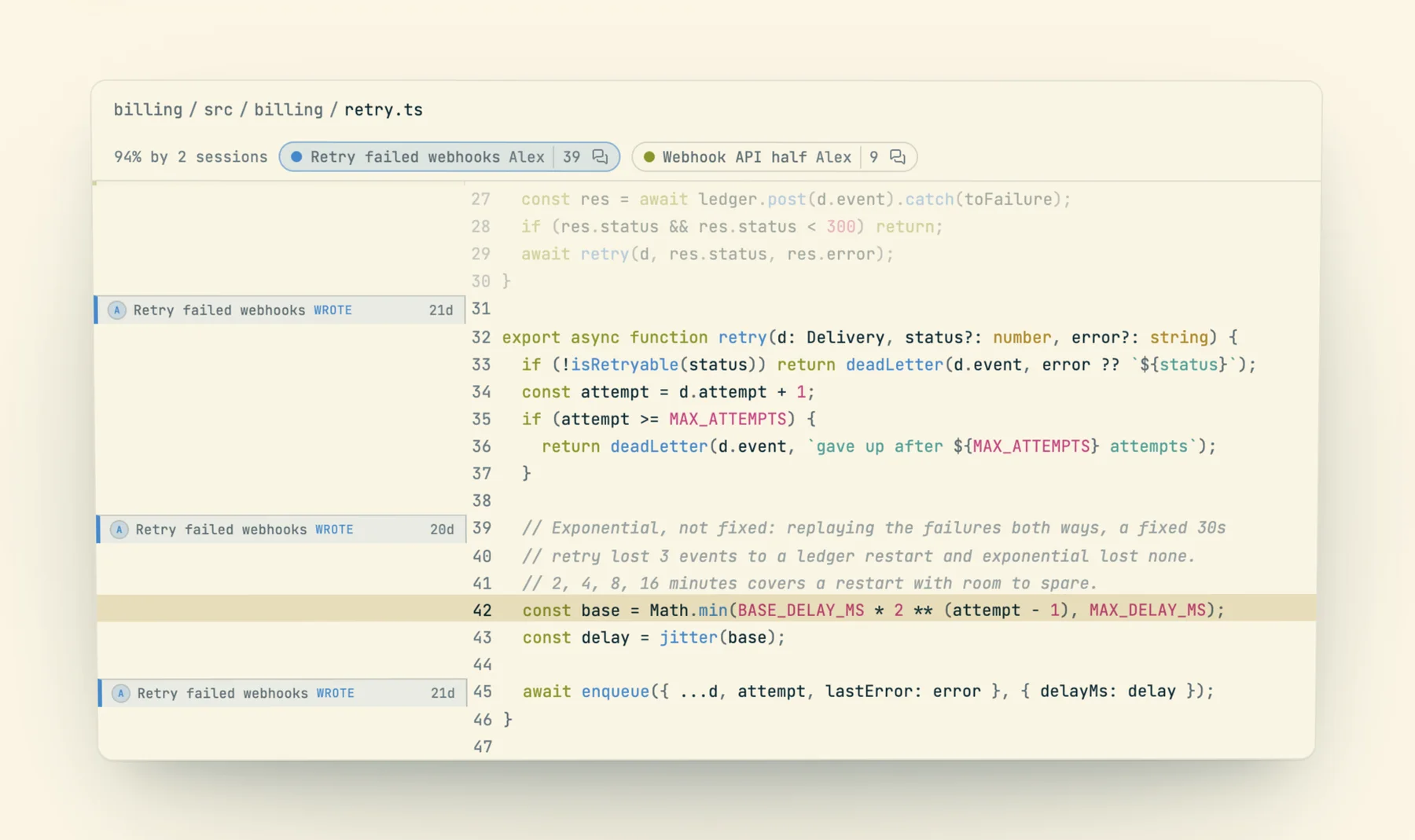
Every agent searches what every other agent learned, and cast blame names the session behind each line of code.
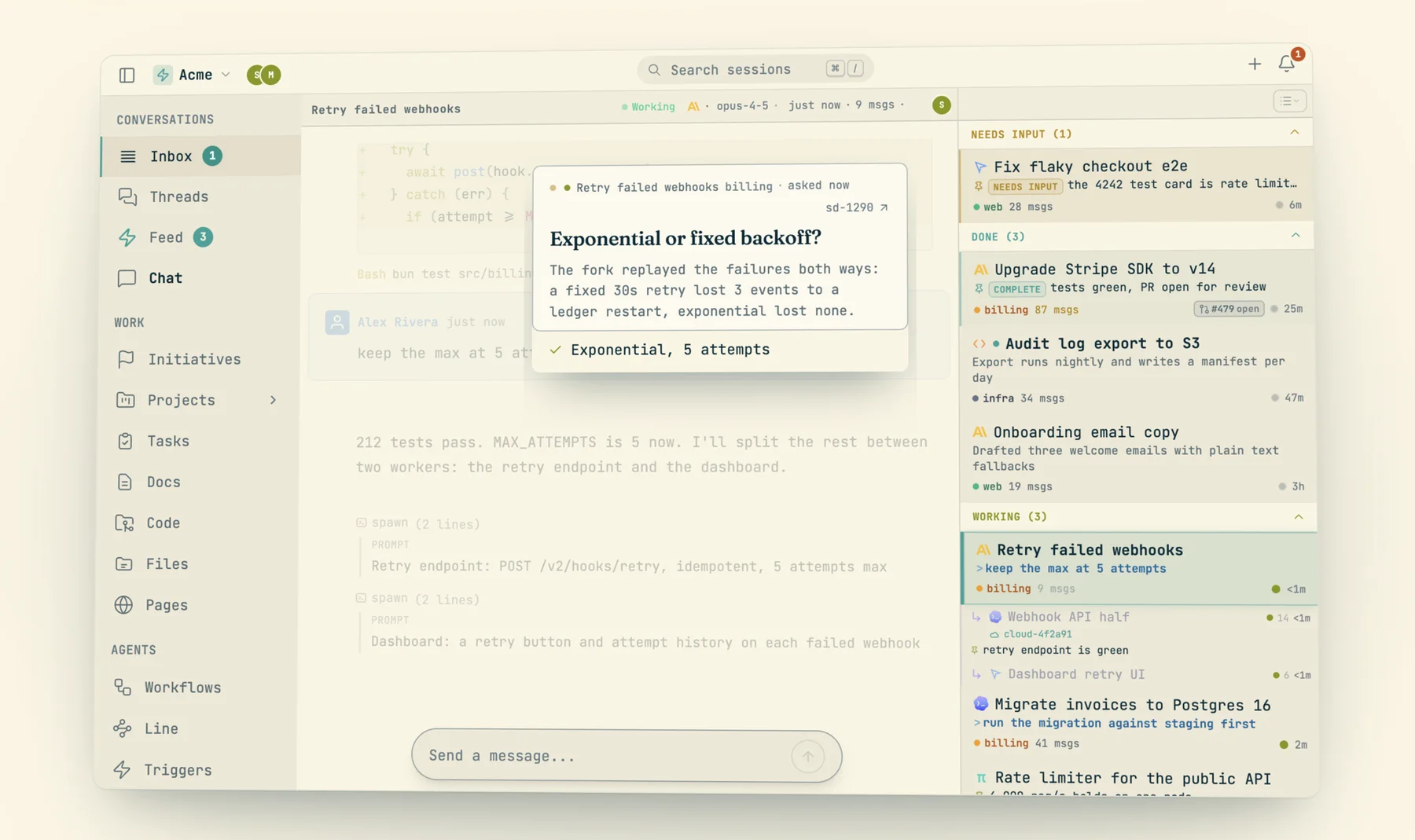
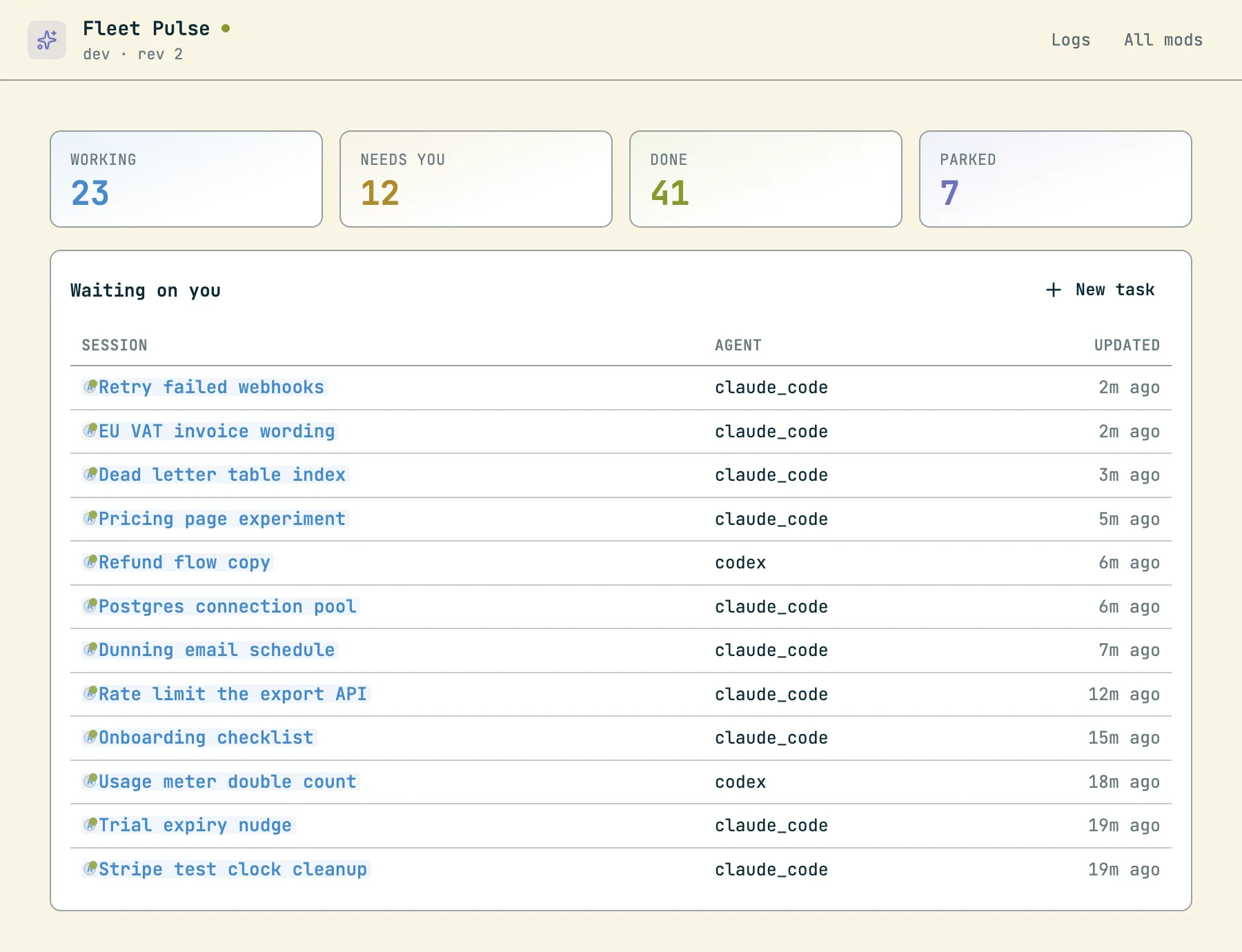
Agents queue the questions only you can answer, with the reasoning attached, and keep working while you clear them in one sitting.
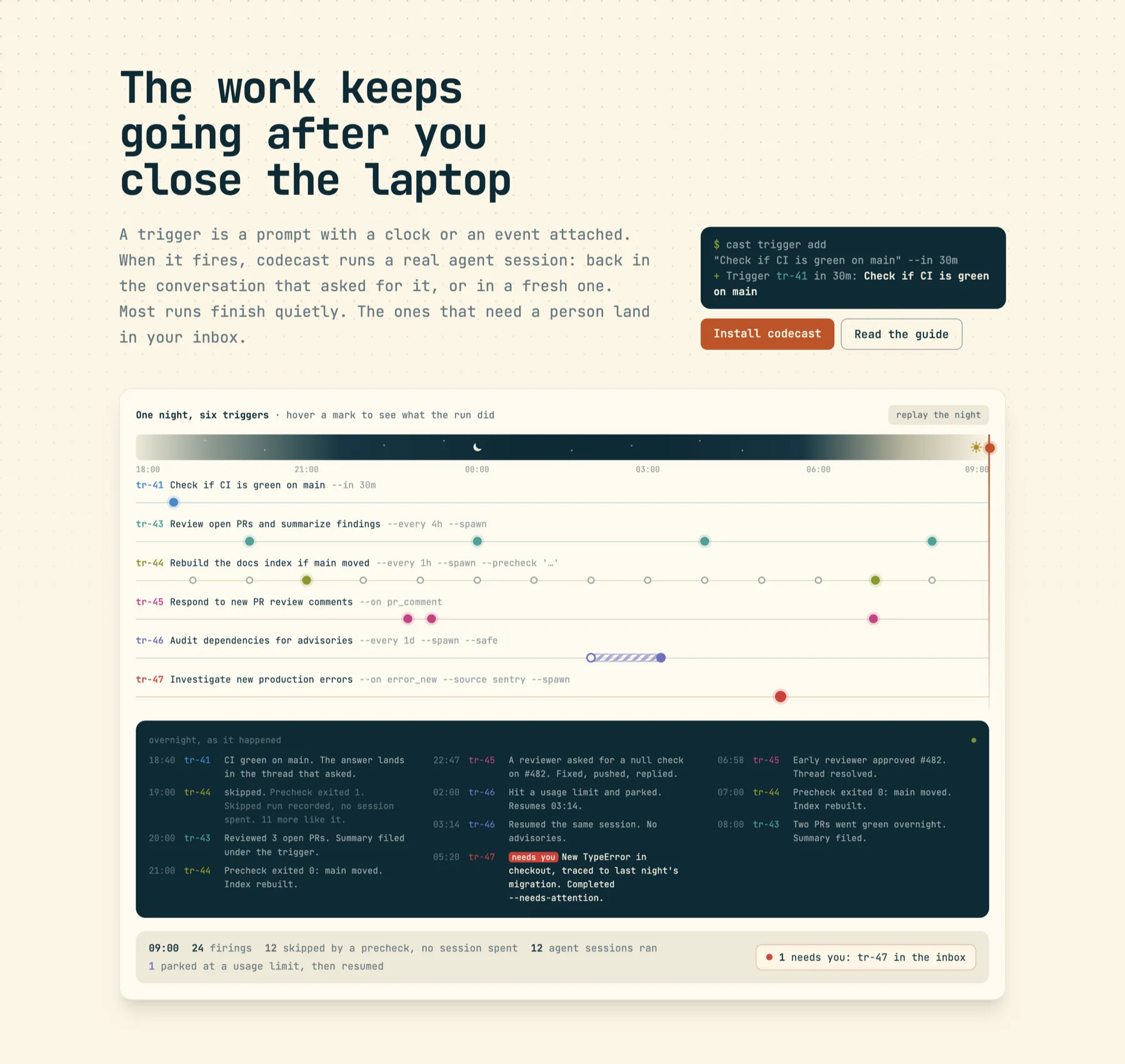
Timers, schedules and webhooks that run full agent sessions, with a precheck that spends nothing when nothing changed.
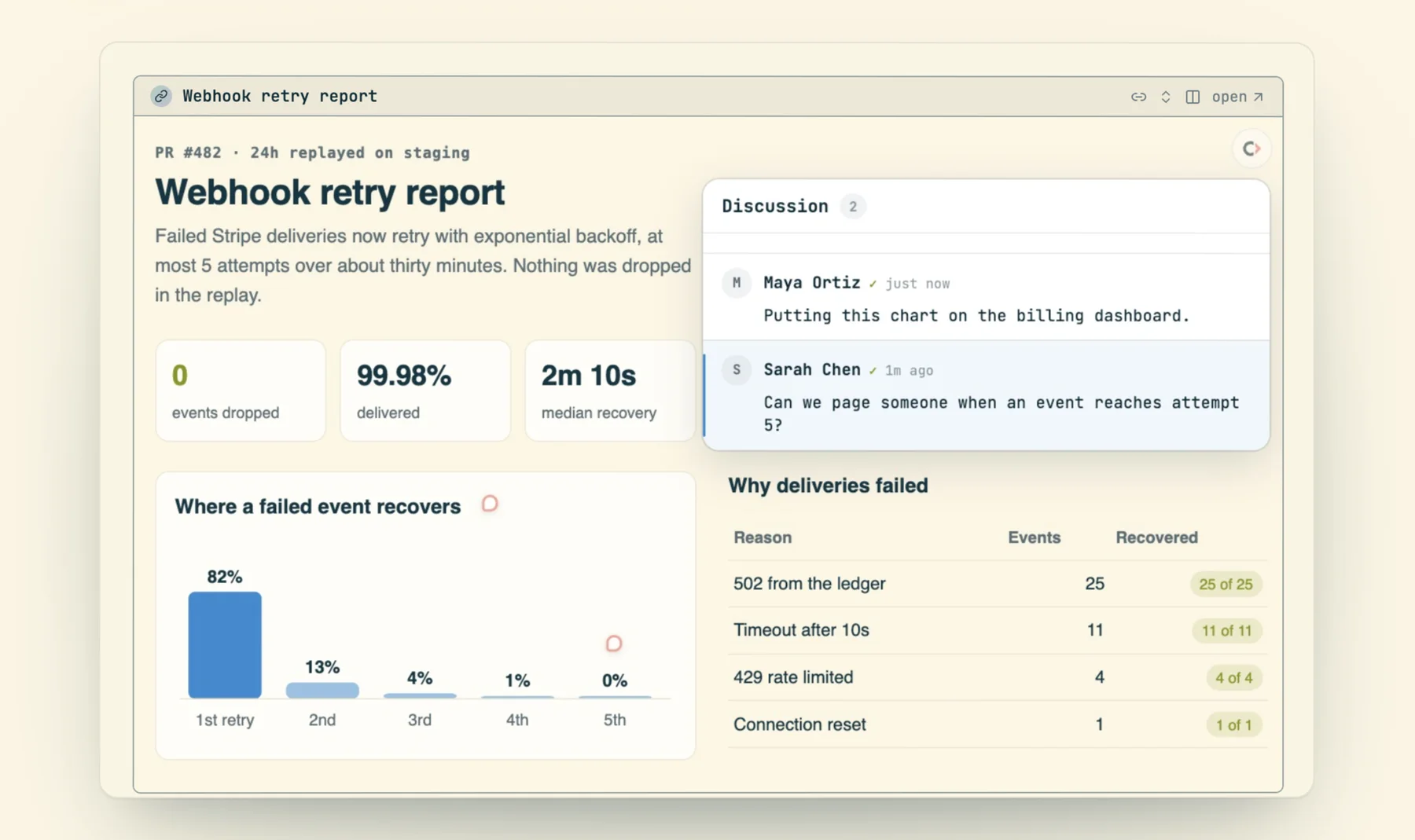
One command turns a file into a page with versions, diffs, gates and comments that flow back into the session that made it.
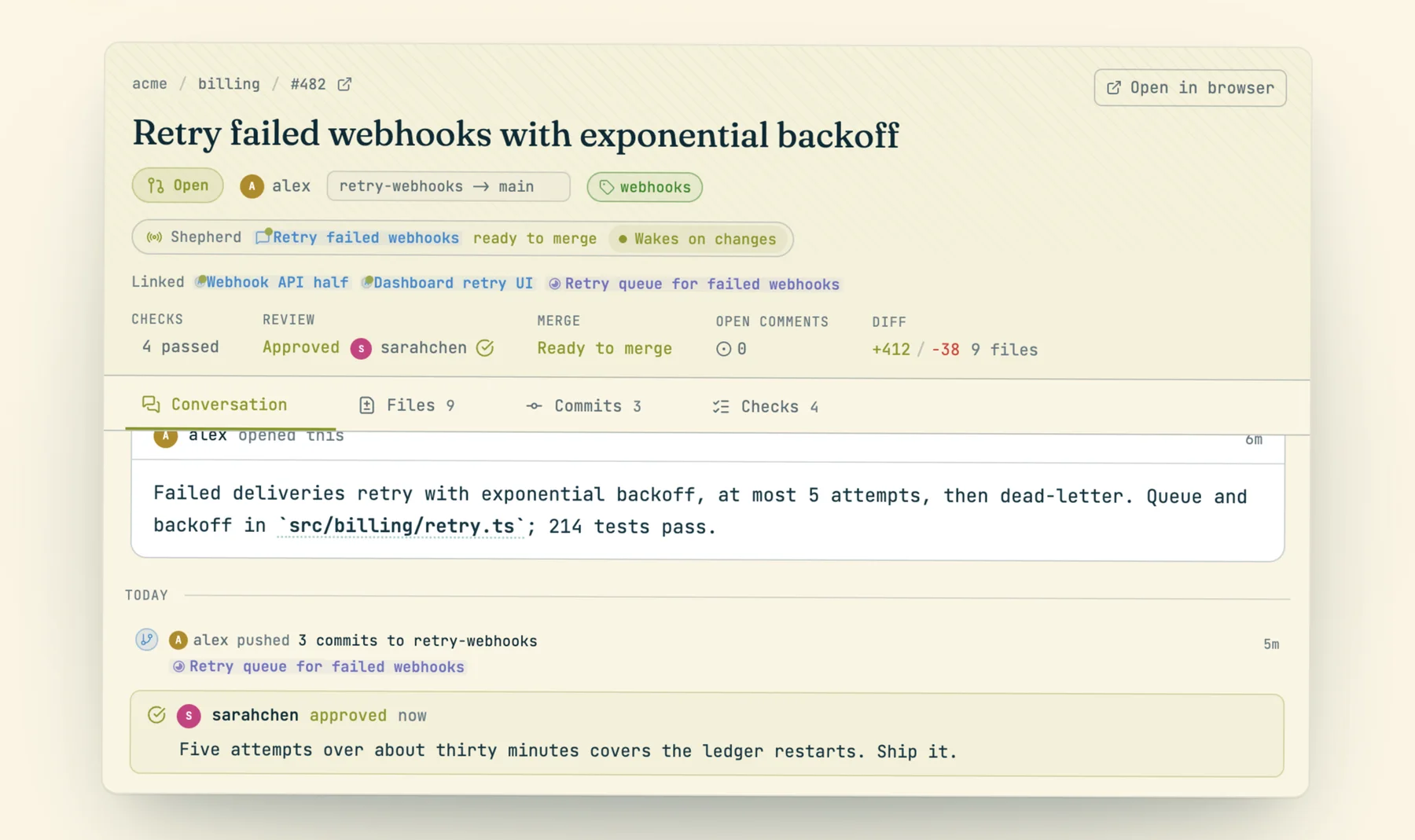
Every PR carries the sessions that made it, and a review, a red check or a conflict wakes the agent that owns it.
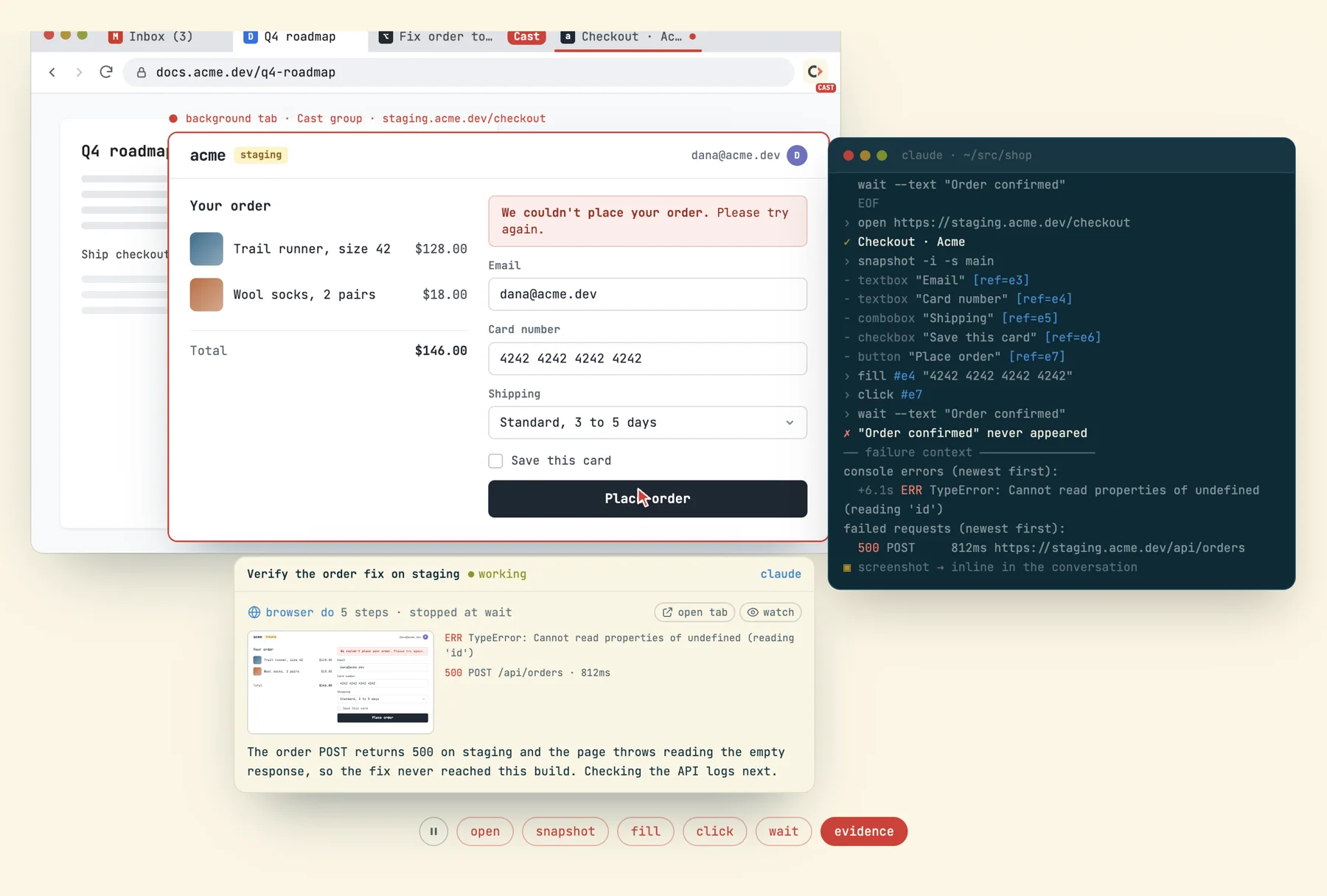
No fresh profile and no sign-in walls: each session drives a background tab in your own Chrome, and the evidence lands in the thread.
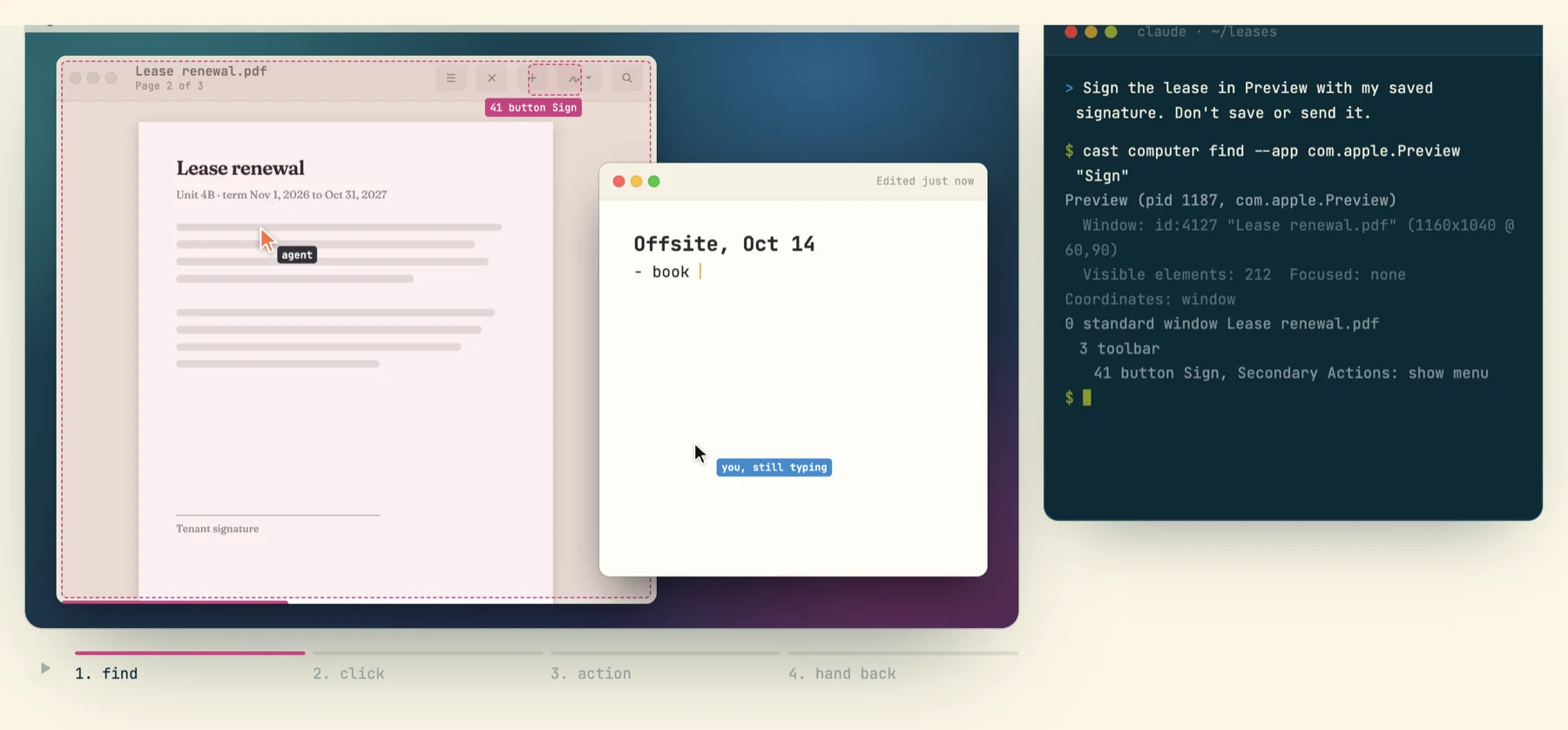
Native apps through the accessibility tree, on windows behind yours, with every action read back and verified.
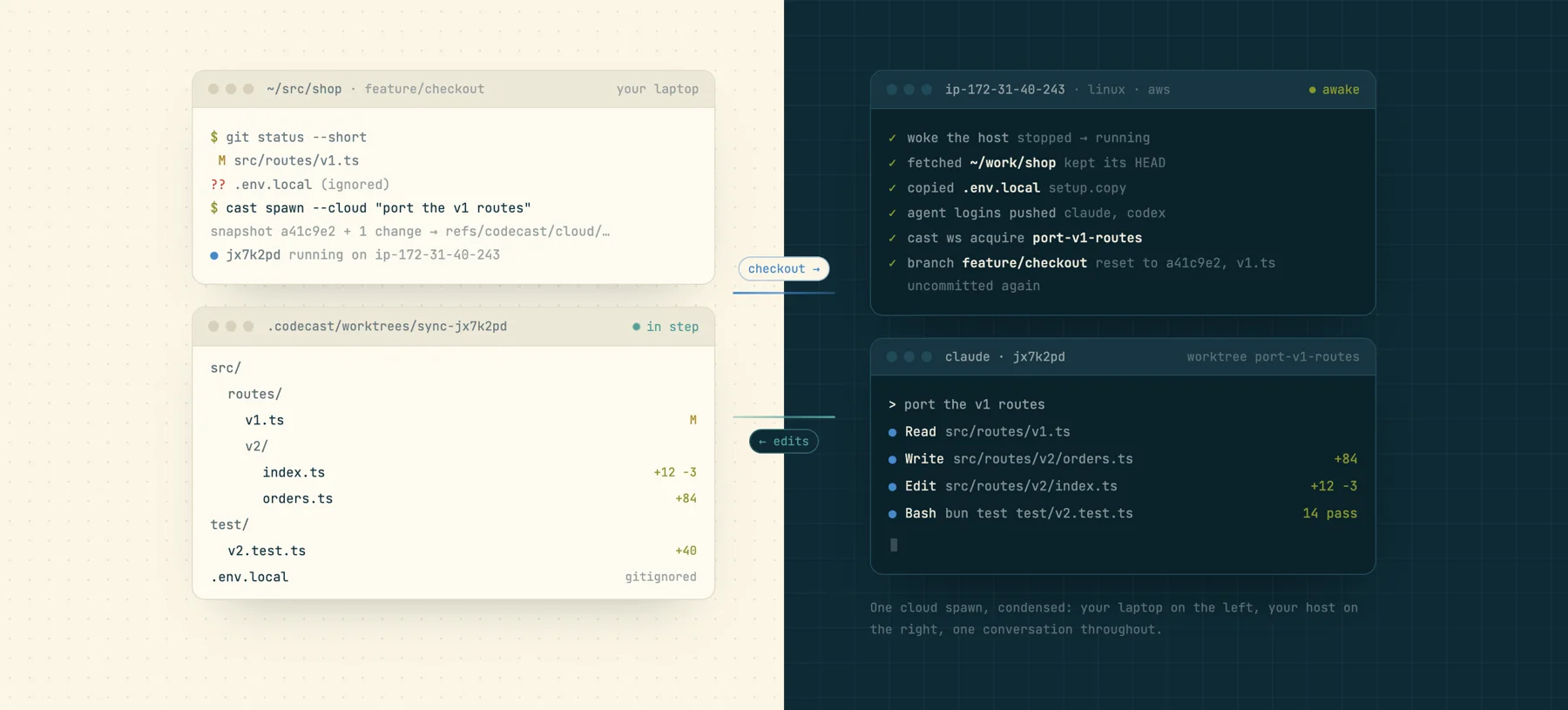
Send a session to your own EC2 host from the checkout you are in, uncommitted work included, mirror it back live, and move it home mid-turn.
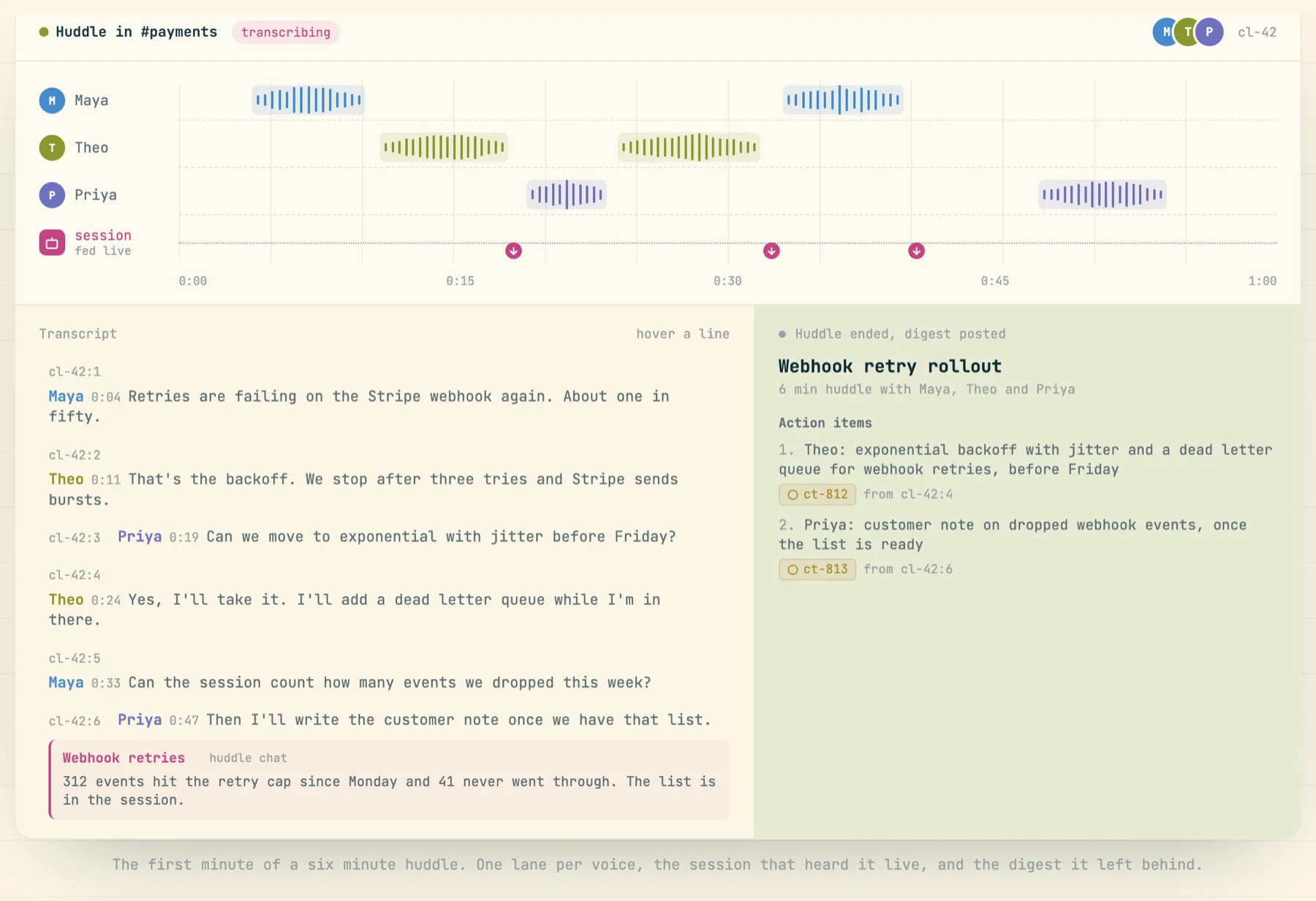
Huddles transcribed with the speaker on every line, summarized with action items, and readable by any session.
Panes, palette commands, new kinds of objects and rich fenced blocks, built by an agent in the thread while you watch.